When parents look for the right school, academic results naturally matter. But increasingly, parents are asking a bigger question: Will this school help my child become confident, independent and capable of handling an ever-changing world? Confidence in children is not simply about speaking loudly in class, scoring high marks or participating in competitions. A truly …
When parents look for the right school, academic results naturally matter. But increasingly, parents are asking a bigger question: Will this school help my child become confident, independent and capable of handling an ever-changing world?
Confidence in children is not simply about speaking loudly in class, scoring high marks or participating in competitions. A truly confident learner is someone who can ask questions, make mistakes, learn from feedback, express an original idea and keep trying when something does not work the first time.
This is where reflection in education becomes important.
Schools that make reflection a regular part of learning give children opportunities to understand how they learn, recognise their progress and think about what they can do differently. Over time, these experiences can help children develop greater self-awareness, resilience and ownership of their learning.
For parents exploring the best CBSE school, a pre-primary school in Kharghar, or the best Cambridge school for their child, these are important qualities to look beyond the report card for.
What Does Reflective Learning Mean for a Child?
Reflection does not necessarily mean asking children to sit quietly and write about their day.
In a school environment, reflection can happen when a child looks at a first draft and thinks about how to improve it, discusses why an experiment produced an unexpected result, considers a different perspective in a story, or talks about how they handled a difficult situation.
The underlying message is powerful:
Learning is a process, and improvement is always possible.
When children internalise this idea, they are less likely to see mistakes as evidence that they are “not good” at something. Instead, mistakes become part of the learning journey.
That shift can have a significant impact on confidence.
Project-Based Learning Teaches Children That Improvement Takes Time
One of the most effective ways to develop reflective learners is through Project-Based Learning (PBL).
At Empyrean children work on extensive projects from the pre-primary years through Grade 8. Up to Grade 3, these projects are transdisciplinary which means that the projects are not restricted to any one subject.
Our students explore an idea, ask questions, make something, receive feedback, revisit their work and improve it.
The final product matters, but so does the process.
Research Helps Children Become Independent Thinkers
From Grade 3 onwards, our students undertake two Research and Investigations per year.
They learn to frame questions, find information, examine evidence, organise their thoughts and communicate what they have discovered.
Along the way, children encounter something that every adult knows: sometimes the first answer is not the complete answer.
This encourages curiosity and intellectual independence.
A child who learns to investigate a question begins to understand that they do not always need someone else to provide the answer. They can find, evaluate and make sense of information themselves.
For parents, this is particularly valuable in an age where children have access to more information than ever before.
Literacy Should Help Children Find Their Own Voice
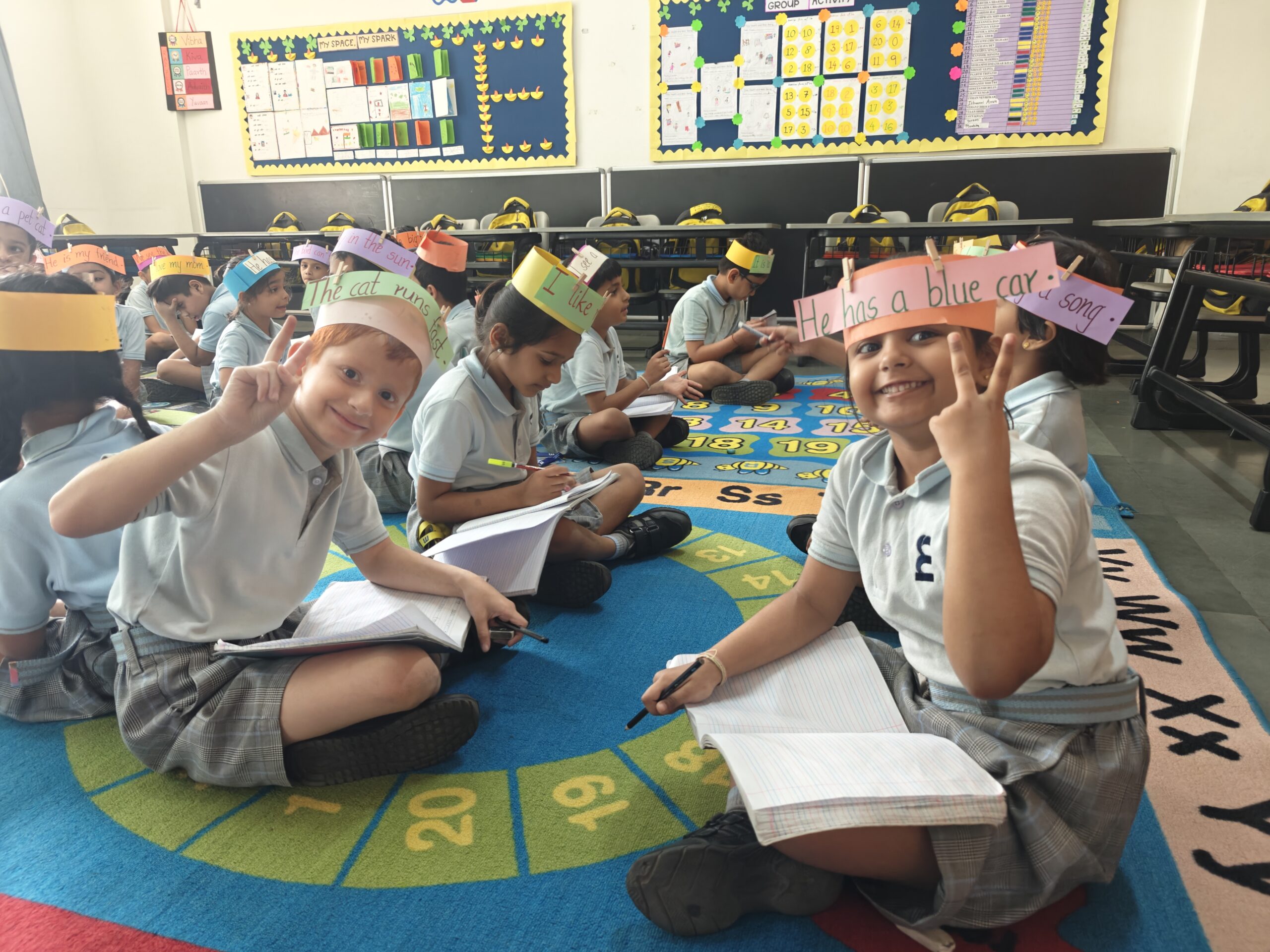
When parents hear the word “literacy”, they may think primarily of reading fluently and writing correctly. These are essential skills, but literacy can go much further.
A strong literacy programme can help children interpret ideas, understand perspectives, make connections and express their own thoughts.
This becomes especially significant in an age of AI.
Technology can increasingly generate grammatically polished text and provide quick answers. But children still need to develop something technology cannot simply substitute: the ability to decide what they think, why they think it and how they want to express it.
When students are encouraged to connect literature and ideas with their own experiences, they develop a more distinctive intellectual voice.
For parents, this raises an important question when evaluating a school:
Does my child merely learn to reproduce information, or are they encouraged to make meaning from it?
Emotional Wellbeing Is Part of Becoming a Confident Learner
A child’s confidence cannot be separated from their emotional wellbeing.
Children experience frustration, nervousness, disappointment, friendship challenges and uncertainty. These experiences are part of growing up. Schools can either leave children to navigate them informally or deliberately create opportunities to understand and manage them.
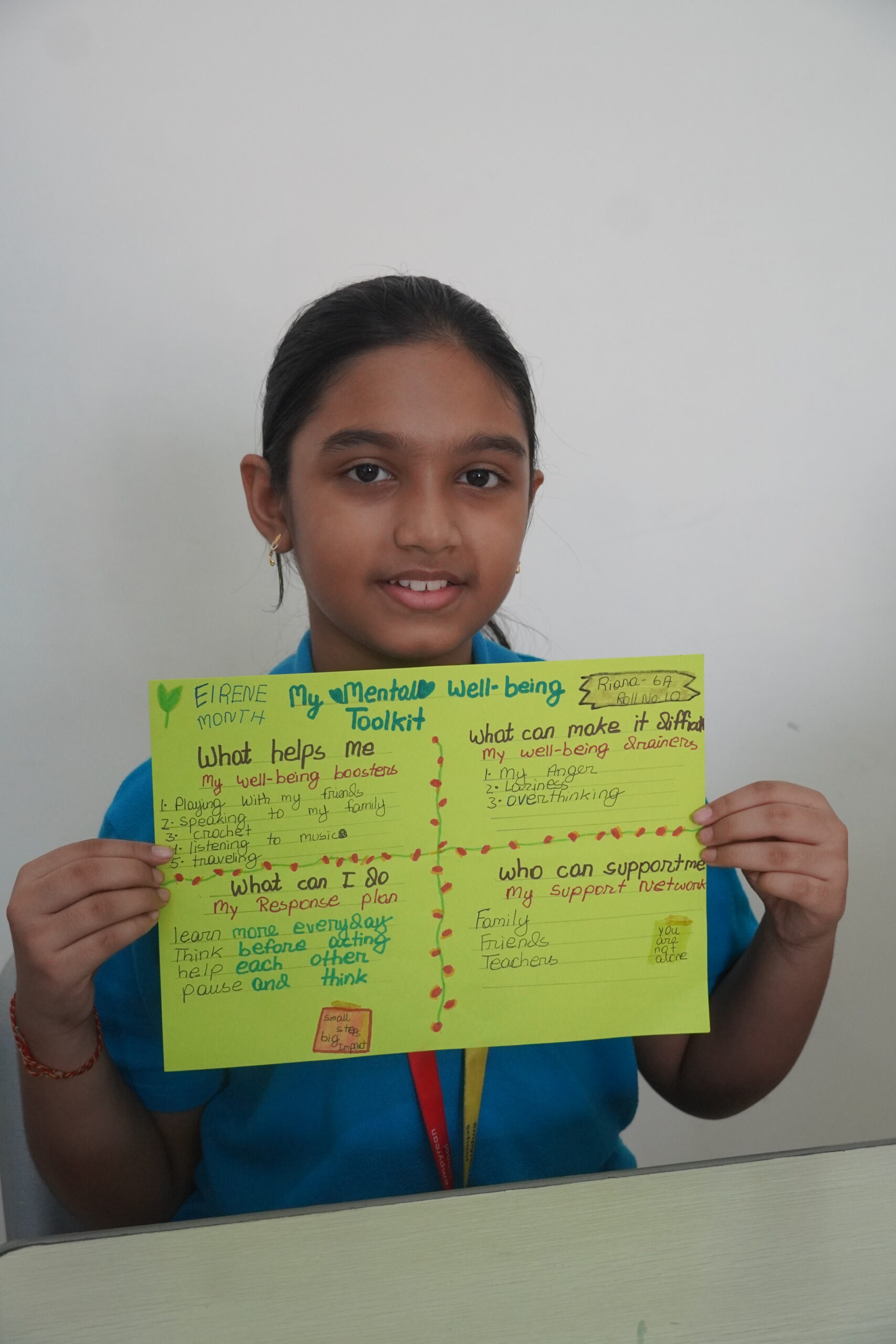
Our Social and Emotional programme called Eirene makes space for this dimension of development.
Through regular reflection on emotions, relationships, choices and experiences, children can develop greater self-awareness.
This does not mean that a confident child never feels nervous or upset. Rather, confidence can grow when children learn that difficult emotions are manageable and that setbacks do not define their abilities.
For parents, this is an important part of looking at the whole child, rather than evaluating a child only through academic performance.
Community Service Helps Children Look Beyond Themselves
Reflection becomes even more meaningful when children learn to look outward.
Through our Community Service Programme, students encounter experiences and perspectives that may be different from their own. They begin to think about their communities, the needs of others and the ways in which their actions can make a difference.
This teaches another important dimension of confidence.
Confidence is not only about being comfortable speaking in front of a classroom. It can also mean having the courage to listen, understand another person’s experience, take responsibility and contribute.
Children begin to see themselves not simply as students completing assignments but as individuals who can participate meaningfully in the world around them.
Raising Children Who Trust Their Ability to Learn
Every parent wants their child to be confident. But confidence does not have to mean always knowing the answer or always getting things right.
Some of the most valuable confidence comes from knowing what to do when you do not know the answer.
A reflective learning environment helps children experience this repeatedly. Through projects, research, literacy, social and emotional learning and community engagement, they learn to question, experiment, reconsider, improve and try again.
Over time, these experiences can shape a child who is more comfortable with challenges and more aware of their own growth.
Ultimately, the goal of education is not only to prepare children for the next examination or the next grade. It is to help them become thoughtful, resilient and independent individuals who can approach unfamiliar situations with curiosity.
Because perhaps the strongest form of confidence is not saying, “I know everything.”
It is being able to say:
“I don’t know yet, but I know how to learn.”