Imagine walking into a classroom where children are not simply memorising facts butactively asking questions, investigating ideas, and discovering answers for themselves. Instead of being told what to think, they are learning how to think.This is the essence of inquiry-based learning, a modern educational approach that istransforming primary education worldwide. As the demands of the …
Imagine walking into a classroom where children are not simply memorising facts butactively asking questions, investigating ideas, and discovering answers for themselves. Instead of being told what to think, they are learning how to think.
This is the essence of inquiry-based learning, a modern educational approach that istransforming primary education worldwide. As the demands of the future continue toevolve, schools are increasingly recognizing that academic knowledge alone is not enough. Children need critical thinking skills, creativity, collaboration, and the confidence to solve real-world problems.
This shift is particularly evident in progressive schools that place curiosity and exploration at the heart of learning. For parents searching for the Best Primary School in Kharghar, understanding inquiry-based learning can provide valuable insight into what sets a progressive primary school apart from traditional educational models.
What Is Inquiry-Based Learning?
Inquiry-based learning is a student-centered approach that encourages children to explore concepts through questioning, investigation, research, and reflection. Instead of receiving information passively, students actively participate in the learning process.
The approach begins with curiosity.
A teacher may introduce a topic by asking an open-ended question such as the Following:
- Why do plants grow differently in different environments?
- How do communities solve problems?
- What makes a city sustainable?
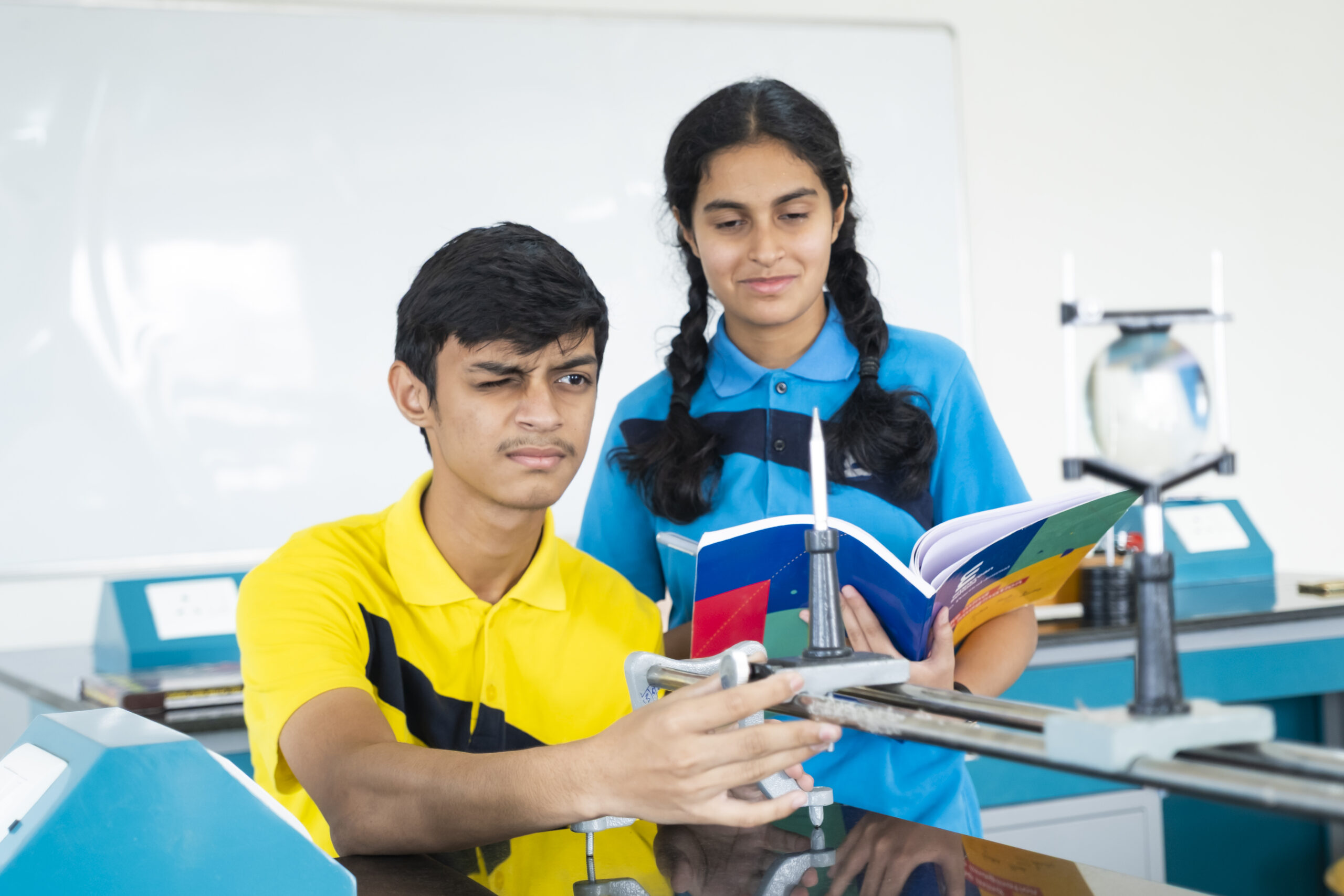
Students then investigate possible answers through observation, discussion, research, experiments, and collaborative projects.
The goal is not simply to find the right answer but to develop the skills needed to ask meaningful questions, evaluate information, and think independently.
Why Inquiry-Based Learning Matters in Primary School
Children are naturally curious. From an early age, they ask countless questions about the world around them. Inquiry-based learning harnesses this natural curiosity and turns it into meaningful educational experiences.
Research consistently shows that active learning improves engagement, retention, and understanding. When children discover concepts through exploration, they are more likely to remember and apply what they learn.
More importantly, inquiry-based learning develops essential future-ready skills such as:
- Critical thinking
- Problem-solving
- Creativity
- Communication
- Collaboration
- Research skills
- Self-confidence
These competencies are increasingly valued in higher education and future careers.
How a Progressive Primary School Differs From Traditional Schools Experiences
Learning Goes Beyond Textbooks
In many traditional classrooms, learning is largely driven by textbooks, lectures, and
worksheets. While foundational knowledge remains important, progressive schools take
learning a step further by connecting concepts to real-world experiences.
For example, instead of simply reading about environmental conservation, students may
investigate local environmental challenges, conduct observations, gather data, and
propose solutions.
This makes learning more relevant, engaging, and meaningful.
Students Become Active Participants
Traditional education often places teachers at the centre of instruction. In contrast,
progressive schools position students as active participants in their own learning
Journey.
Teachers act as facilitators who guide inquiry, encourage exploration, and support
independent thinking.
This approach empowers children to take ownership of their learning and develop
greater confidence in their abilities.
Focus on Understanding Rather Than Memorisation
Memorising information may help children perform well on tests, but deep
understanding enables them to apply knowledge in new situations.
Inquiry-based classrooms prioritise conceptual understanding. Students are encouraged
to analyse information, make connections, and explore multiple perspectives rather than
simply memorising facts.
As a result, learning becomes more meaningful and long-lasting.
Real-World Learning in Action
One of the defining characteristics of a primary school in Kharghar progressive is the
emphasis on experiential learning.
For instance, when studying a topic like water conservation, students might:
● Conduct water usage surveys
● Research local water challenges
● Interview community members
● Design awareness campaigns
● Present solutions to peers
Through these experiences, children develop academic knowledge alongside practical
life skills.
Learning becomes something they do, not something that happens to them.
The Role of Interdisciplinary Learning
In the real world, problems rarely fit neatly into a single subject area.
Progressive schools recognise this by integrating multiple disciplines into meaningful
learning experiences.
A project on sustainable cities, for example, may combine:
Science
Understanding environmental impact and renewable energy.
Mathematics
Analysing data and calculating resource consumption.
Language
Writing reports and presenting findings.
Social Studies
Exploring urban planning and community needs.
This interdisciplinary approach helps children see connections across subjects and
understand how learning applies beyond the classroom.
Project-Based Learning:
At Empyrean, Project-Based Learning (PBL) is integrated through structured inquiry
cycles that encourage students to plan, create, reflect, and refine their work over time.
Students engage in extensive projects that require sustained inquiry, allowing them to
investigate meaningful questions, conduct research, apply knowledge across
disciplines, and develop deeper understanding through continuous exploration. This
process encourages learners to think critically, solve problems creatively, and make
meaningful connections between concepts and real-world contexts. Through PBL,
students actively construct knowledge while strengthening collaboration,
communication, and reflective thinking skills.
What Parents Should Look For?
When evaluating the best primary school in Kharghar, parents should consider
whether the school:
- Encourages curiosity and questioning
- Supports experiential learning
- Develops critical thinking skills
- Provides personalised learning opportunities
- Promotes student voice and leadership
- Connects classroom learning to real-world experiences
- Focuses on holistic development alongside academics
These factors often indicate a progressive learning environment that prepares children not only for exams but also for life.
Inquiry-based learning represents a powerful shift from traditional education toward a more meaningful, engaging, and future-focused approach. By encouraging children to ask questions, investigate ideas, and take ownership of their learning, it nurtures skills that extend far beyond academic success.
Progressive primary schools understand that education is not simply about delivering information. It is about helping children become curious thinkers, confident communicators, creative problem-solvers, and lifelong learners.
For families seeking the best primary school in Kharghar, choosing a school that embraces inquiry-based learning can provide children with the foundation they need to thrive in an increasingly complex and dynamic world.